
When expecting parents search for a placenta encapsulation specialist, their number one concern is safety. Because placenta processing involves handling organic biological matter, maintaining rigorous hygiene, food safety standards, and strict temperature control is non-negotiable.
Establishing professional-grade standard operating procedures (SOPs) protects your clients’ health and establishes your practice as an elite, trustworthy authority in the birth community. Here is a breakdown of the essential safety protocols every specialist should follow.
1. Sanitation and Workspace Protocols
Your processing space must meet food-safety standards that go far beyond standard household kitchen cleaning:
- Medical-Grade Sanitization: Use hospital-grade, food-safe disinfectants to thoroughly sanitize all counters, dehydrator trays, utensils, and workspace surfaces before and after every single batch.
- Dedicated Equipment: Never mix your personal kitchen gear with your encapsulation equipment. Dehydrators, grinders, encapsulation machines, and storage containers must be dedicated solely to placenta processing.
- Personal Protective Equipment (PPE): Always wear clean scrubs, hair coverings, gloves, and face masks during handling to prevent any cross-contamination.
2. The Science of the 72-Hour Safety Clock
Timing and temperature control are critical components of safe placenta preparation. Whether utilizing traditional methods or steamed (Traditional Chinese Medicine) methods, tracking processing times with precision is vital:
- Strict Dehydration Standards: Placentas must be dehydrated at precise, consistent internal food-safety temperatures until completely desiccated (snapping rather than bending) to ensure all moisture is removed.
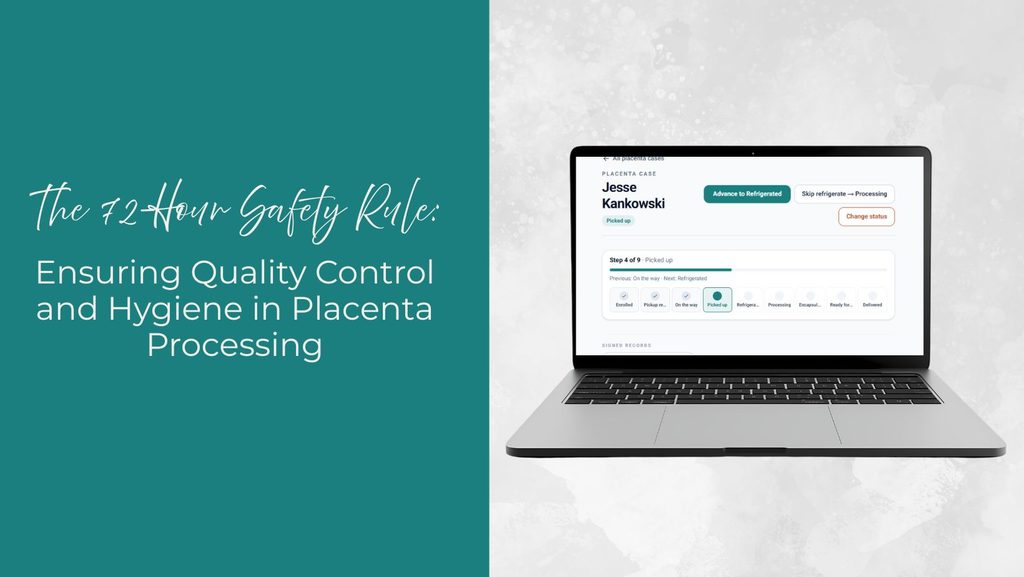
- Automated Milestone Timers: Relying on kitchen timers or memory to track when a placenta went into the dehydrator or how long it has been resting creates human error. Modern specialists use digital workflow timers that log the exact hour processing begins and enforce safety windows.
- Storage Threshold Monitoring: If processed capsules or raw assets sit in storage past completion, automated safety alerts should immediately notify you and the client to prevent forgotten pickups.
3. Communicating Safety to Clients and Midwives
Transparency builds instant trust. You can showcase your commitment to safety through your client communications:
- Clear Transport Guidelines: Provide clients and birth partners with explicit instructions on proper refrigeration and transport containers (hard-sided coolers with ice packs) immediately following delivery.
- Transparent Standards: Publish your hygiene checklist, sanitation methods, and safety standards directly in your client portal or educational materials so parents feel completely confident in your expertise.
Conclusion
Safety is the cornerstone of a successful placenta encapsulation practice. By adhering to strict sanitation protocols, tracking processing windows with digital precision, and maintaining transparent standards, you ensure top-tier product quality and safeguard your reputation as a premier birth professional.
Ready to stop wrestling with administrative tasks and give your practice the professional infrastructure it deserves? Visit www.BirthFlowApp.com to start your 7-day free trial today and experience how effortless automated intake, digital chain-of-custody tracking, and built-in legal protection can be for your placenta encapsulation business.