
Navigating hospital policies is one of the trickiest parts of running a placenta encapsulation practice. Babies rarely arrive during convenient 9-to-5 business hours, and every hospital network enforces its own rigid rules regarding biological asset release, refrigeration, and timing.
For independent birth workers and multi-service agency doulas, managing these variables manually often leads to late-night phone tag, confusion, and unnecessary stress. Here is a practical guide on how to handle varying hospital protocols, streamline middle-of-the-night logistics, and protect your practice.
Understanding the Four Major Hospital Protocol Profiles
Different medical facilities handle placenta release in drastically different ways. To keep your workflow organized and your clients safe, your operational strategy must adapt to these standard facility profiles:
- Pick Up At Discharge (Standard Coordination): The most common scenario. The placenta is kept in the mother’s room refrigerator until discharge. This allows for standard scheduling during daytime hours.
- Pick Up Immediately (Hospital Mandated): Driven by strict facility policy, some hospitals require the placenta to be removed from the room within a specific short window after delivery. This frequently triggers middle-of-the-night emergency responses.
- Pick Up During Stay (Priority Coordination): Required when a facility has unique storage limitations or policies that prohibit room storage, requiring a family member or doula to pick up the asset hours after birth.
- Home Birth (Casual Coordination): The most flexible environment, where the placenta is immediately managed by the midwife or family according to agreed-upon home-storage guidelines.
Managing Middle-of-the-Night Logistics & On-Call Boundaries
When an “immediate pickup” is triggered at 2:00 AM, specialists face a major burnout risk. Protecting your mental health and physical stamina requires clear boundaries combined with smart routing tools:
- Define Active On-Call Windows: Establish clear working hours (e.g., 7:00 AM to 9:00 PM) for routine coordination while maintaining a separate emergency response protocol for urgent pickups.
- Emergency Override Toggles: Use system settings that allow you to choose whether urgent placenta requests can “break through” your resting hours based on the hospital profile.
- The Nighttime Protocol Fallback: If a client requests a pickup during resting hours at a strict facility, ensure your workflow automatically pushes clear, safe interim storage instructions (such as proper icing and refrigeration steps) so the family knows the asset is secure until morning.
Best Practices for Professional Coordination
To ensure smooth handoffs and eliminate miscommunication with hospital staff and families, implement these three operational habits:
- Educate Clients During Prenatal Intake: Review the hospital’s specific release policy during your intake process. Make sure the client knows who to call first and whether the hospital requires a signed release form.
- Verify Packaging Requirements: Always instruct families on proper medical-grade transport containers (such as hard-sided coolers with ice packs) to comply with health department standards.
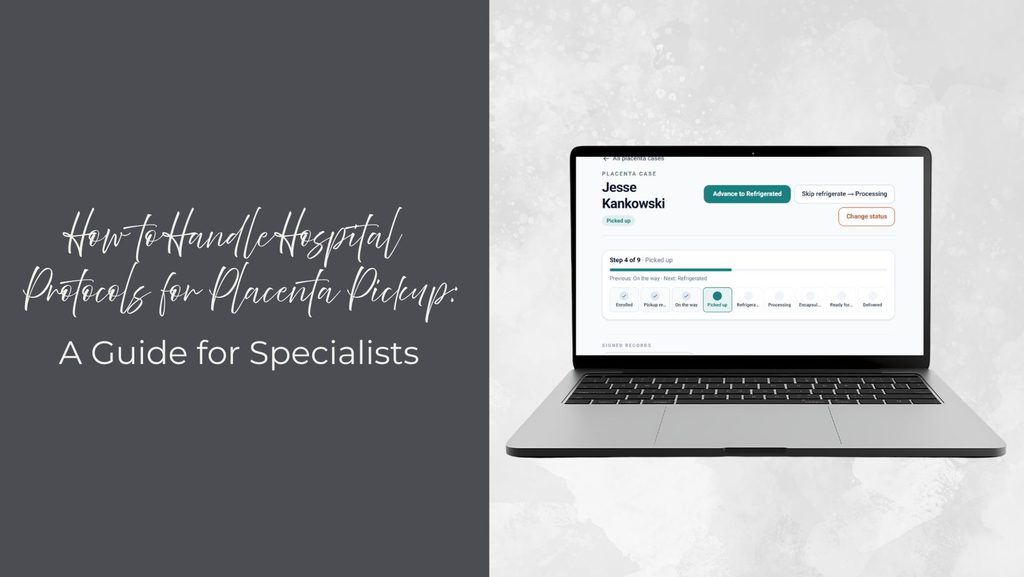
- Digitize Your Chain of Custody: Never rely on text message threads to confirm a transfer. Use digital signatures right at the bedside or doorstep to officially log the transfer of custody.
Conclusion
Handling hospital pickups smoothly is what separates an amateur hobbyist from a professional, trusted placenta encapsulation specialist. By categorizing hospital protocols, setting firm on-call boundaries, and utilizing automated workflows, you can protect your energy while delivering a flawless, high-end experience for your postpartum clients.
Ready to stop wrestling with administrative tasks and give your practice the professional infrastructure it deserves? Visit www.BirthFlowApp.com to start your 7-day free trial today and experience how effortless automated intake, digital chain-of-custody tracking, and built-in legal protection can be for your placenta encapsulation business.